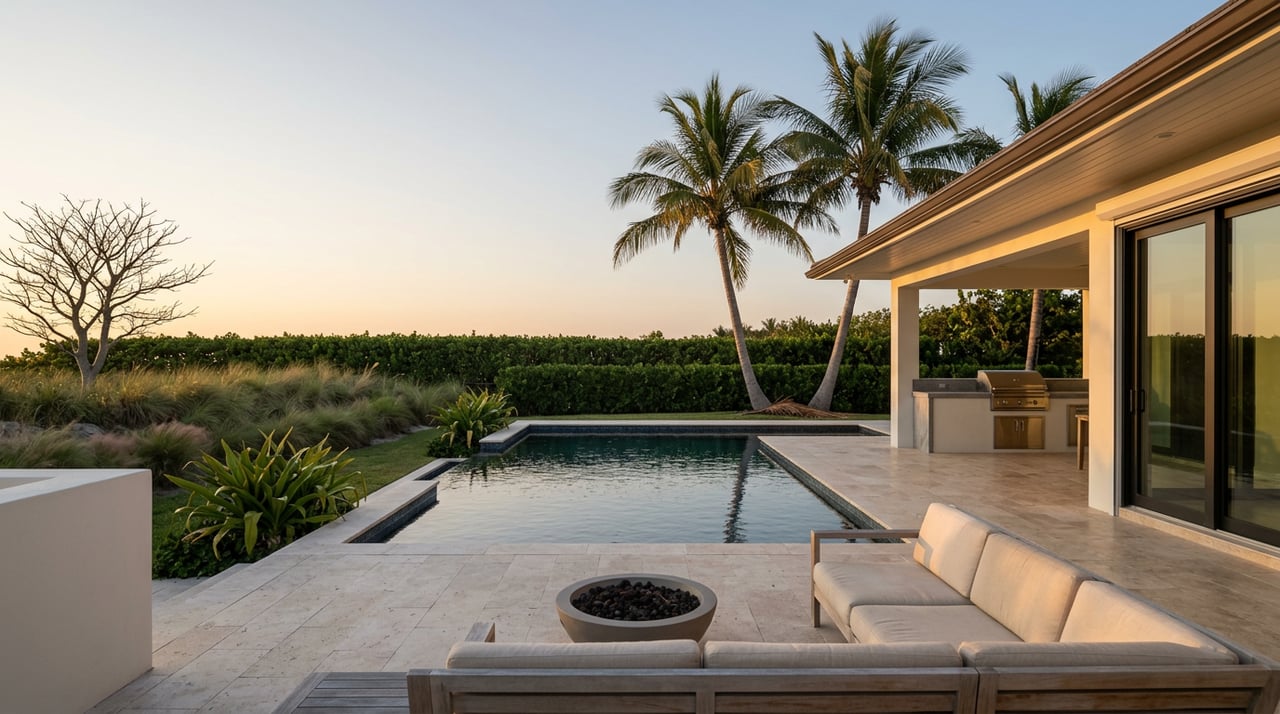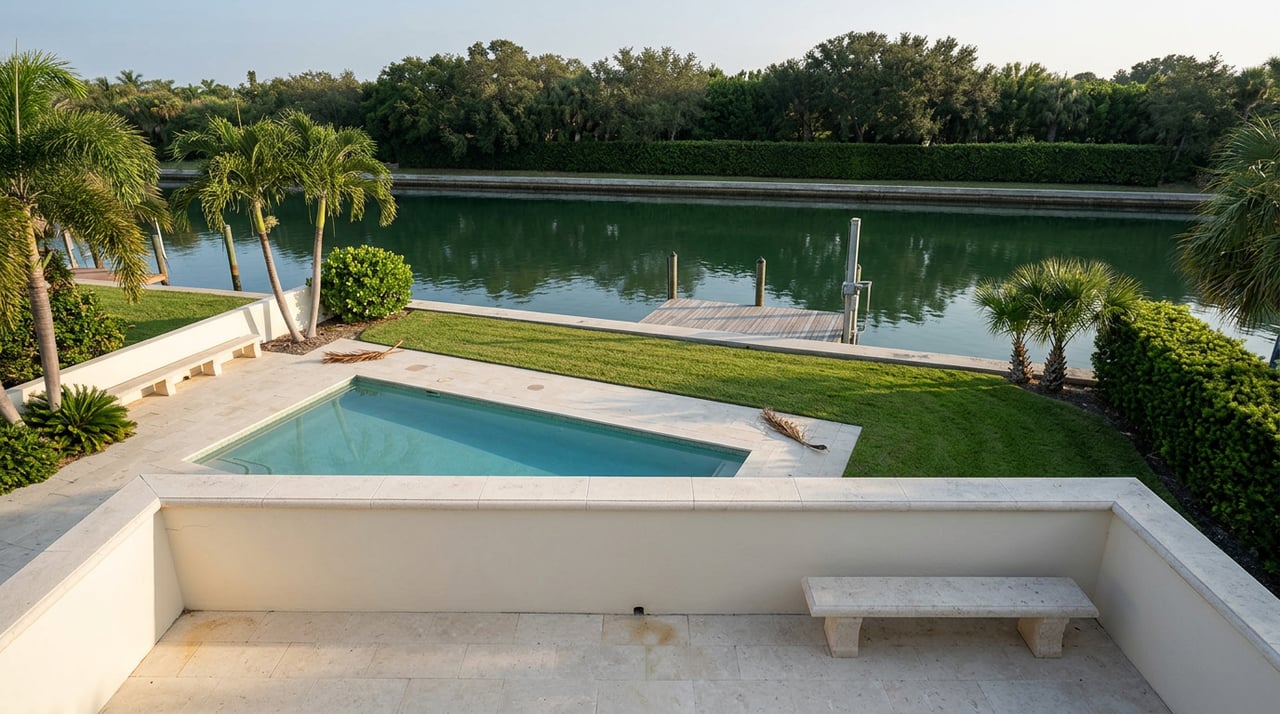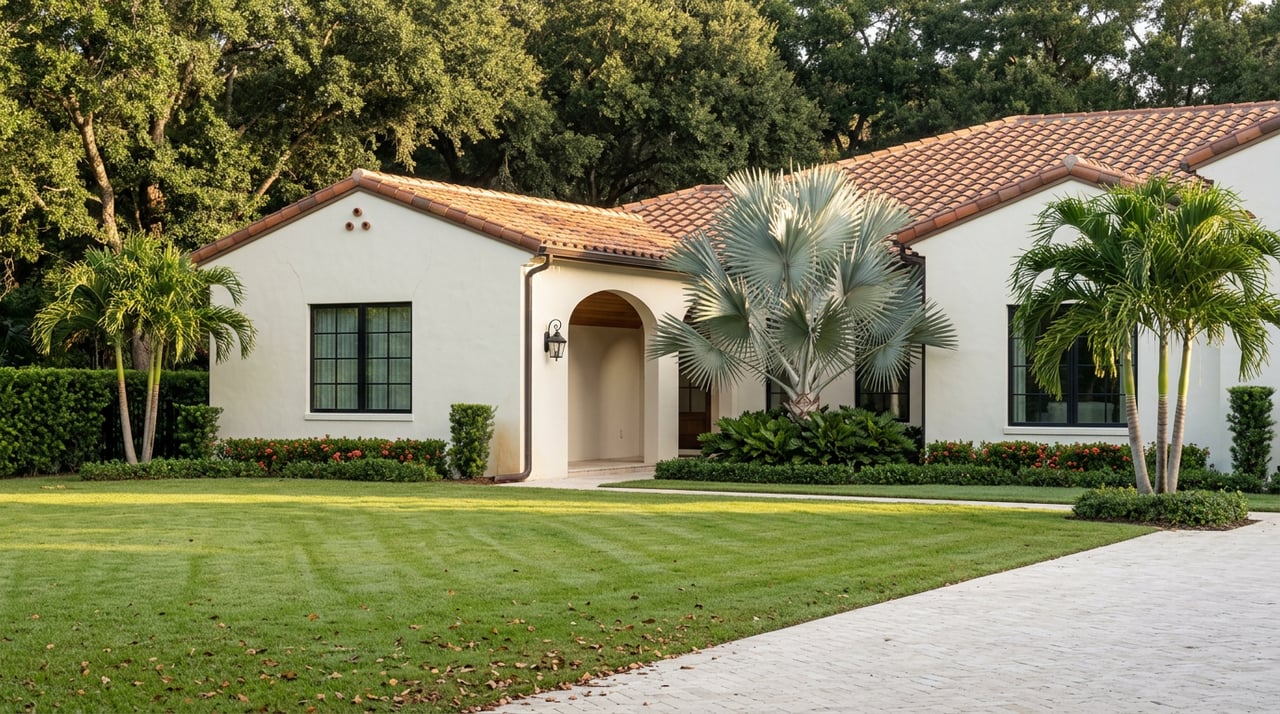
Pull a Collier County property tax bill for a home in most Naples golf communities and scan past the homestead exemption, the millage rate, the school district line. Somewhere in that stack sits a Community Development District assessment, a bond payment tied to the land itself that funds the roads, gates, and utility work laid down when the community was built. It's fixed, it's disclosed, and it follows the property whether you plan to golf every week or never touch a club.
Pull the same bill for a home in Quail West and that line simply isn't there.
That absence is the kind of detail buyers comparing initiation fees and home prices tend to miss entirely, because it never shows up on either number. It shows up on a tax bill most people don't read closely until they're already at the closing table wondering why two communities that look similar on paper carry such different monthly math.
What a CDD Assessment Actually Pays For
A Community Development District is a special taxing mechanism Florida developers use to finance infrastructure ahead of building it. Roads, drainage, irrigation, sometimes the clubhouse shell itself, all financed through bonds that get repaid over a fixed term, typically 15 to 30 years, through an annual assessment tied to the parcel. Across Naples golf communities, that assessment commonly runs $2,400 to $12,000 a year depending on the size of the original bond and how much term remains. A $6,000 annual assessment with 20 years left on the bond is a $120,000 obligation attached to the property, and it doesn't appear anywhere in the listing price.
This is standard financing, not a red flag. Most master-planned communities in Southwest Florida use it, because it lets a developer build infrastructure before the first home closes and spread the cost across everyone who eventually buys in. The bond gets paid down whether you're the first owner or the fifth.
Quail West never took that path.
A Debt-Free Club, Not a Discounted One
Quail West was developed by Stock Development across 1,180 acres and operates as a member-owned, debt-free community with no CDD attached to it. When the club undertook a $43 million clubhouse and course renovation in 2017, reworking both Arthur Hills-designed courses under architect Drew Rogers and expanding the clubhouse to its current 100,000 square feet, that capital came from the membership structure itself rather than a municipal bond sold against future tax assessments.
The clubhouse now houses multiple dining venues including Cypress Grille and the Mahogany Room, an indoor lagoon-style pool, a two-story fitness center, and a full-service spa, and golf membership is capped at 525 players across two 18-hole courses, the Lakes and the Preserve. That cap is itself a byproduct of the ownership model. A bundled community selling access to every homeowner has every incentive to keep membership open. A member-controlled club funding its own capital projects has every incentive to keep the roster tight enough that the course stays playable and the amenities stay uncrowded.
None of this means the missing tax line is free money. It means the same cost that a CDD bond would spread over 20 years on a fixed schedule gets absorbed instead through club dues, HOA layers, and periodic capital contributions the membership votes on directly. The risk moves from a predictable, declining bond payment to a variable one tied to whatever the next renovation costs and how the membership chooses to fund it.
Three Clubs, Three Ways of Pricing the Same Expense
Grey Oaks, Mediterra, and Quail West get compared constantly by buyers narrowing a short list, usually on initiation fee and home price alone. Laid out with the financing structure included, the picture looks different.
Grey Oaks sits closest to downtown Naples, about 4.5 miles from Fifth Avenue, and spans three championship courses across 54 holes under roughly 19 separate HOAs, a structure that reflects its size and long build-out. The 2025 average single-family sale came in at $4,658,526, or $1,060 per square foot. Full golf membership initiation reached $375,000 in 2026, with annual golf dues around $25,286.
Mediterra offers 36 Tom Fazio-designed holes and a private Gulf beach club on Little Hickory Island, a feature neither Grey Oaks nor Quail West can match. The 2025 average single-family sale was $3,947,693 at $850 per square foot. Golf membership initiation stood at $250,000 through the 2025-26 season, with annual dues around $25,700, before rising to $300,000 when the increase took effect on August 1, 2026.
Quail West carries no CDD, a 525-member golf cap across two Arthur Hills courses, and estate lots running a half acre to a full acre, among the largest of any gated golf community in the market. In April 2026, a renovated estate at 4300 Brynwood Drive closed at $11.3 million, the highest-priced transaction in the community's history, on a lot overlooking the 15th hole of the Preserve course.
None of these numbers say one club costs less than another once you add up HOA dues, club dues, capital assessments, and whatever tax-bill line applies. They say the three communities have made different choices about who carries the financing risk and over what timeline, and that choice matters more to your long-term carrying cost than the initiation fee headline does.
What an $11.3 Million Sale Signals About the Ceiling
A single transaction doesn't set a market, but a record does tell you where a community's top end currently sits. The Brynwood Drive sale landed on one of Quail West's largest lot formats, the kind of half-acre-plus estate parcel the community was specifically designed around, and it closed at a price that outpaced anything the community had recorded before. That's consistent with a club that has kept its membership roster capped and its lot sizes generous rather than maximizing density, a structural choice that shows up in resale ceilings just as much as it shows up in the absence of a tax bond.
Before You Compare Two Initiation Fees
If you're weighing Quail West against a peer club, the initiation fee and the home price are the easy numbers to find and the least complete way to compare. A more useful due diligence pass looks like this:
- Ask directly whether the community carries a CDD assessment, and if so, request the current annual amount and the years remaining on the bond.
- Request the club's most recent capital assessment history, since a debt-free structure means future renovations get funded through the membership rather than a bond, and that history tells you how often and how large those assessments have run.
- Compare total carrying cost, not sticker cost. Add HOA dues, club dues, food and beverage minimums, and either the CDD assessment or the club's capital assessment pattern, then run that number over a 10-year hold rather than a single year.
- Confirm membership caps and current waitlist status for golf, since a capped roster protects tee times but can also mean a longer wait to activate full golf privileges if you're buying resale.
Questions Buyers Ask at This Price Point
Does no CDD mean Quail West is cheaper overall? Not necessarily. It means the cost of infrastructure and major renovations is funded through the membership structure instead of a municipal bond, which shows up in dues and capital contributions rather than a fixed tax-bill line.
Do all Naples golf communities carry a CDD? No, but many do. It's worth confirming for any specific community rather than assuming either way, since the presence or absence changes your total carrying cost calculation.
Is a debt-free structure more stable than a bonded one? They carry different kinds of predictability. A CDD bond has a fixed schedule and a known payoff date. A member-funded model depends on how disciplined the club has been about planning and reserving for capital projects, which is exactly why asking for the assessment history matters before you buy.
If you're comparing Quail West, Grey Oaks, or Mediterra and want the full carrying-cost picture rather than just the number on a sign, that's the kind of comparison The Whitcomb Group works through with clients before an offer goes in, not after.